






导语:As late spring arrives, rain moistens all living things, and Guyu (Grain Rain) comes on time. As a key solar term for farming and a carrier of profound culture, it is also closely linked with the UN Chinese Language Day. This article explains the nature and humanity behind Guyu.
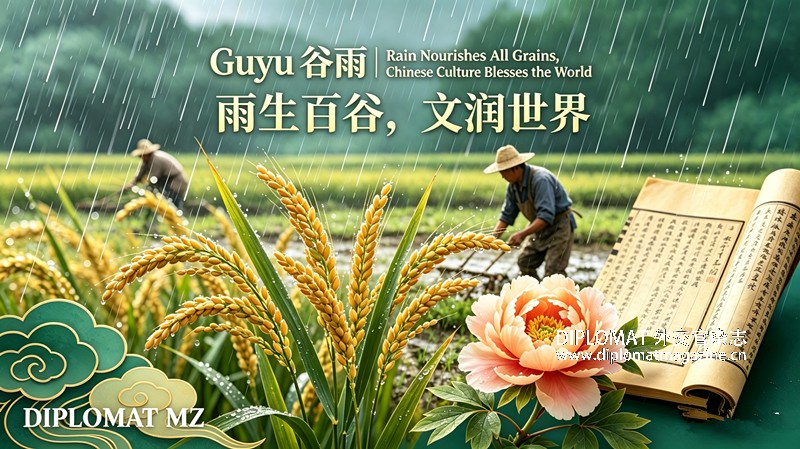
Introduction
As late spring arrives, rain moistens all living things, and Guyu (Grain Rain) comes on time. As a key solar term for farming and a carrier of profound culture, it is also closely linked with the UN Chinese Language Day. This article explains the nature and humanity behind Guyu.
About Guyu
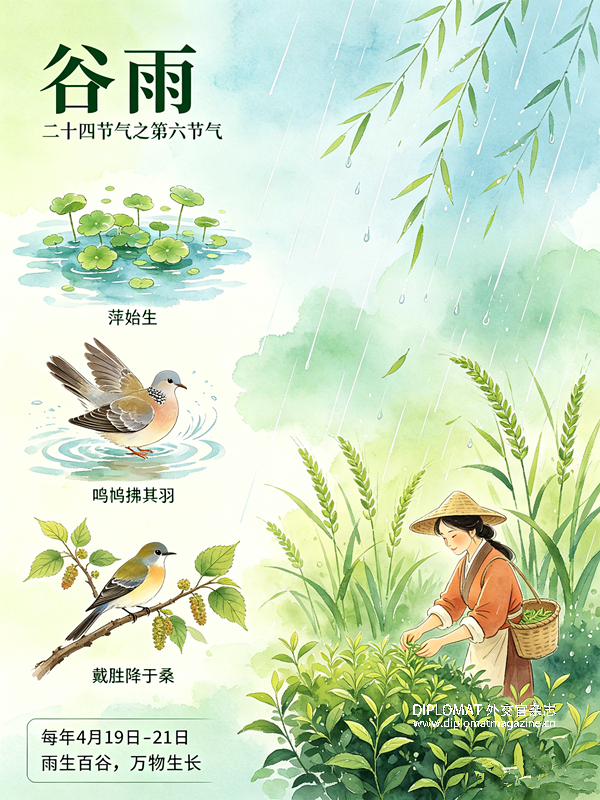
Guyu is the 6th solar term in the Chinese 24 Solar Terms and the last solar term of spring. It usually falls between April 19 and 21 of the Gregorian calendar, when the sun reaches the celestial longitude of 30°.
The name literally means "Rain Nourishes Grains", from Interpretation of the Seventy-Two Pentads. Abundant rainfall at this time supports grain growth, making it a critical period for agriculture.
After Guyu, cold waves end completely, temperatures rise steadily, and late spring transitions into early summer, laying the foundation for summer’s lush growth.
Solar Term Phenology
As the closing solar term of spring, Guyu is defined by plentiful rain and rising temperatures.
Southern China sees frequent frontal rain, while northern China welcomes precious rainfall, as the saying goes: "Spring rain is as precious as oil".
The ancient Chinese divided Guyu into three pentads:
First, duckweeds begin to grow; second, cuckoos brush their feathers; third, hoopoes land on mulberry trees.
Every change follows the rhythm of nature.
Health Preservation in Guyu
In Guyu, the climate is humid with temperature fluctuations. Health care focuses on strengthening the spleen, removing dampness, and nourishing body and mind.
Daily routine: Sleep late and rise early to follow late spring yang energy; add clothes in the morning and evening to prevent late spring cold.
Diet: Eat toon, shepherd’s purse, Chinese yam and other spleen‑strengthening foods; drink Guyu tea moderately; avoid raw, cold and greasy food.
Mood: Take outdoor walks, connect with nature, ease spring melancholy, and stay calm.

Flowers and Birds in Guyu
Guyu is the peak season for flowers and birds in late spring, full of vivid natural scenery.
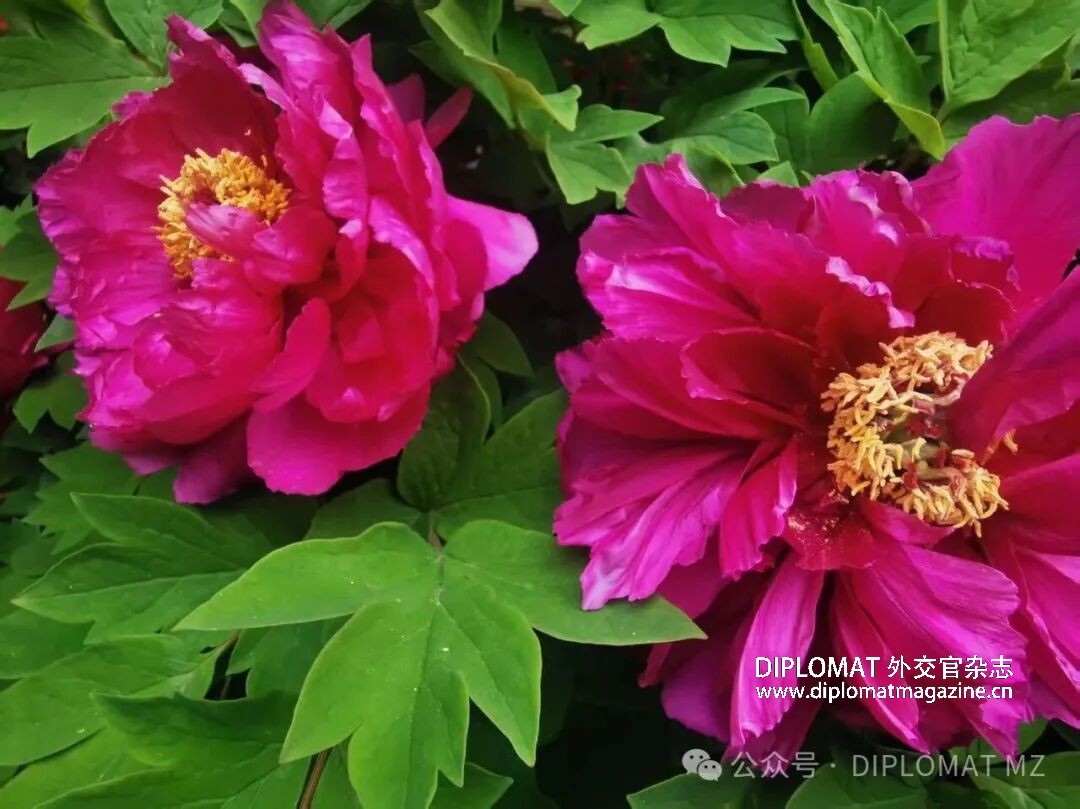
Flowers: Guyu marks the end of the 24 Flower Wind Periods, represented by tree peony, rubus rosaefolius, and chinaberry flower.
Tree peony is known as the "Guyu Flower", and "viewing peonies three days after Guyu" has been a custom for thousands of years.
Birds: Cuckoos sing to urge farming; hoopoes perch on mulberry trees, matching the sericulture season.
UN Chinese Language Day
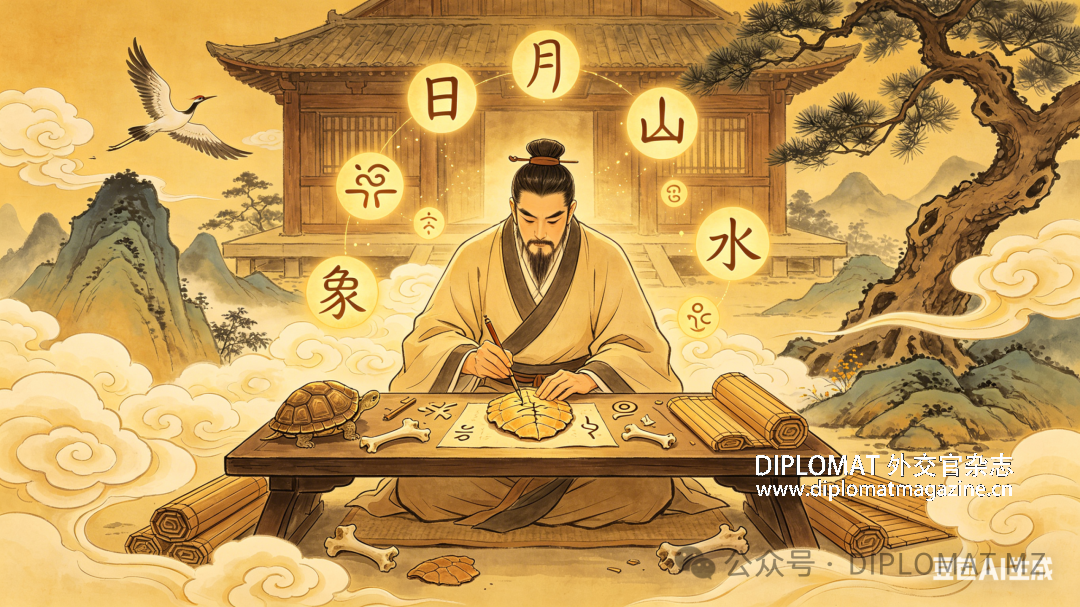
Guyu has a deep connection with the UN Chinese Language Day: the United Nations officially designates Guyu as the annual UN Chinese Language Day.
It commemorates the legend of Cang Jie creating Chinese characters. It is said that Cang Jie’s invention moved heaven, and a rain of grains fell to nourish all things.
Characters, like spring rain, nurture civilization and spread wisdom. The establishment of Chinese Language Day makes Guyu a cultural bridge connecting China and the world.
Conclusion
Rain nourishes grains; culture enriches hearts. Guyu embodies the vitality of nature, the wisdom of farming, and the depth of culture.
May we follow the seasons, nourish body and mind, and understand the Chinese charm in solar terms.
Source:China Meteorological Administration, United Nations Official Website
Edited by:Diplomat Magazine Team