


导语:Since 2023, I have continuously worked on a watercolor series titled “Dialogues with Plants.” On May 9, 2026, I was invited by The Diplomat MZ’s“XiaoFeiXia” cultural exchange program to create a painting for the Tunisian National Tourist Office
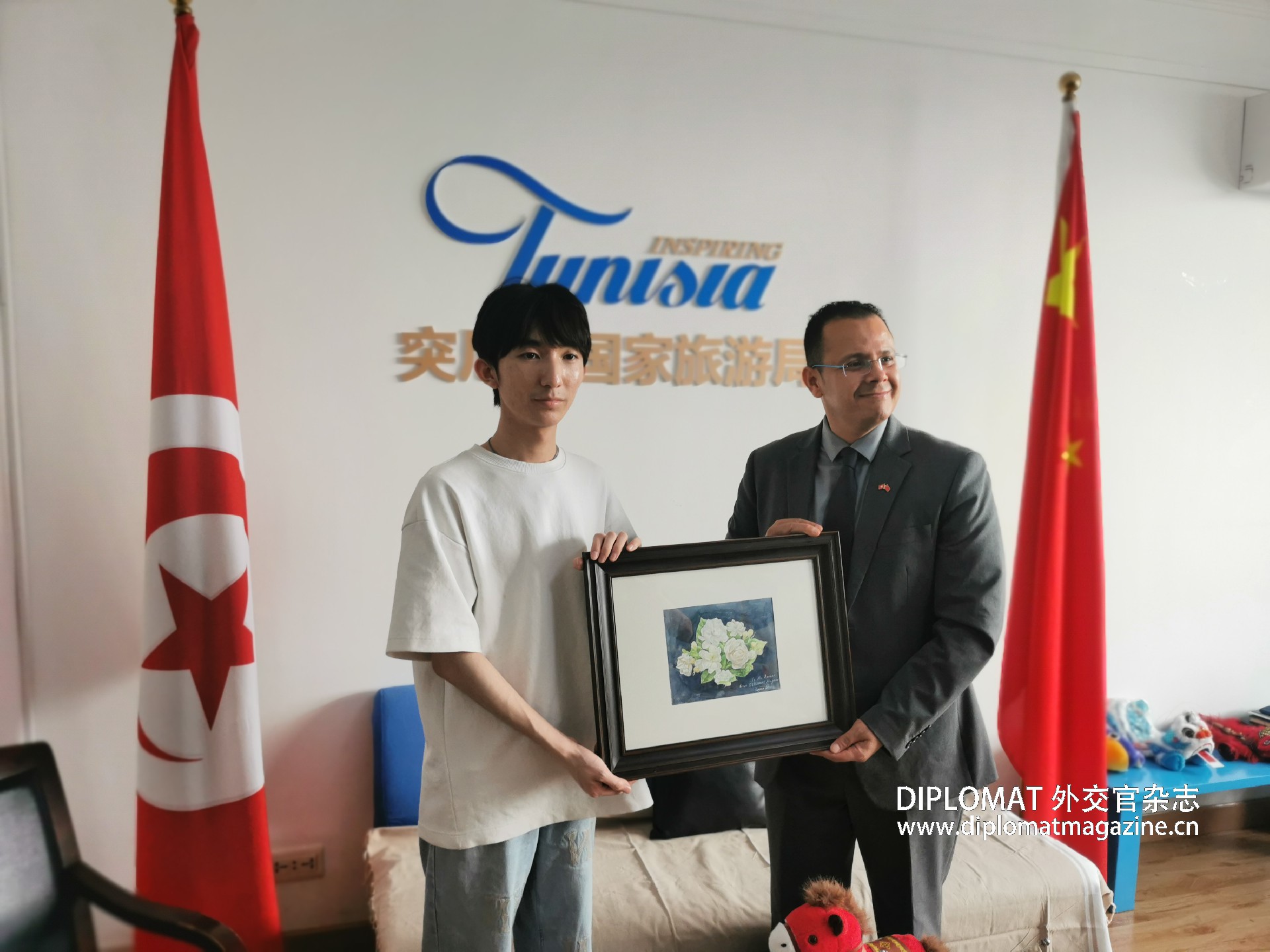
Since 2023, I have continuously worked on a watercolor series titled “Dialogues with Plants.” On May 9, 2026, I was invited by The Diplomat magazine’s“XiaoFeiXia” cultural exchange program to create a painting for the Tunisian National Tourist Office.
During the creative process, I learned more about Tunisia — a North African country known for its rich history, diverse culture, and distinctive Mediterranean charm. Jasmine is Tunisia’s national flower and symbolizes purity, elegance, and hospitality in Tunisian culture. At the same time, it also represents international friendship and cross-cultural exchange. Although I have never personally visited Tunisia, I had long heard of Sidi Bou Said, the famous seaside town whose iconic blue and white architecture beautifully blends Mediterranean and Arab cultural influences.
Inspired by this, I created a watercolor painting titled The Jasmine Family. In the painting, several clusters of jasmine flowers in different forms gather closely together with a deep blue background, highlighting the flowers’ purity while also paying tribute to the beauty of Tunisia. Since the establishment of diplomatic relations between China and Tunisia on January 10, 1964, the two countries have maintained friendly and steadily developing relations. To me, jasmine symbolizes the sincere cultural exchange between China and Tunisia, while also expressing my hopes for a lasting friendship between the two nations.
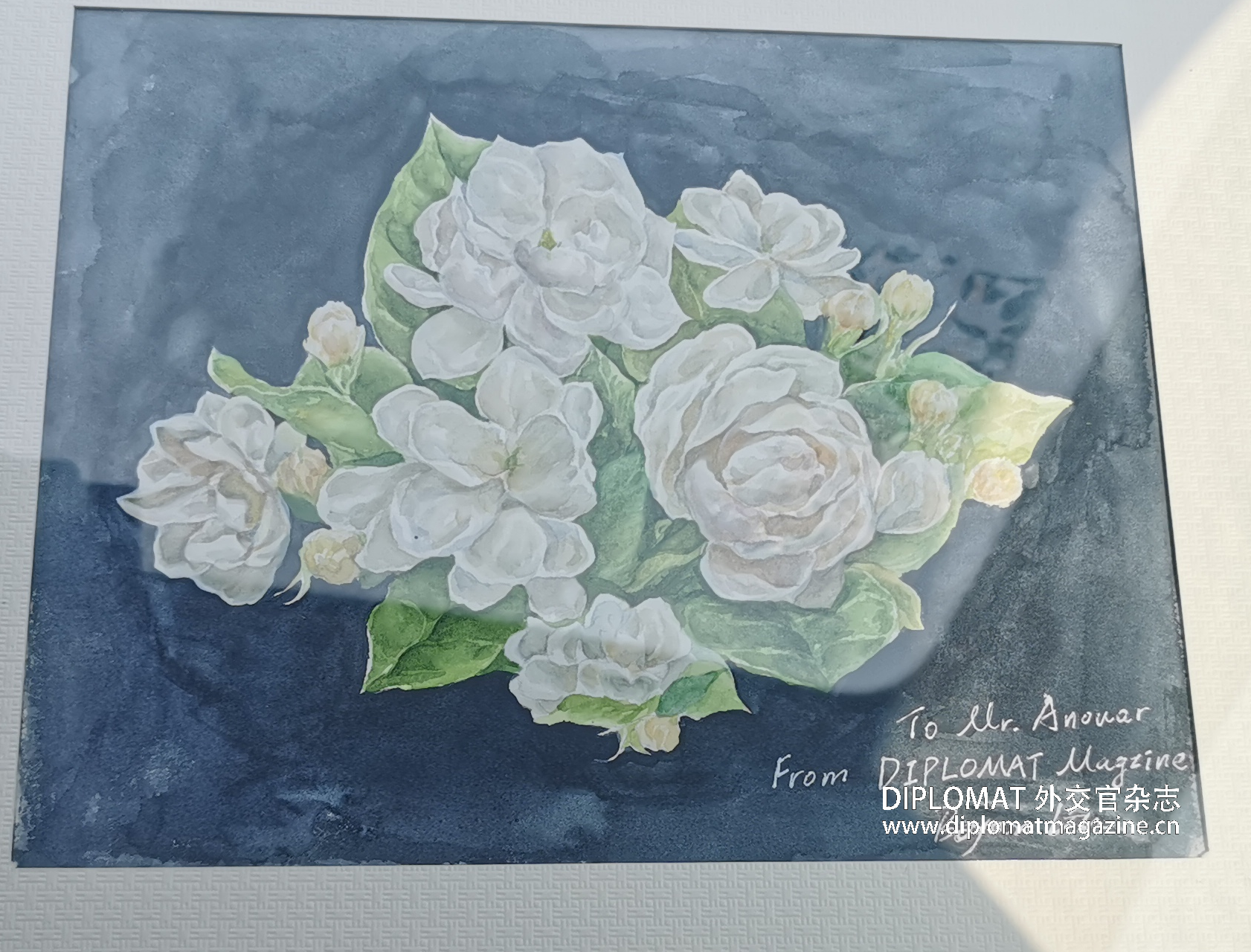
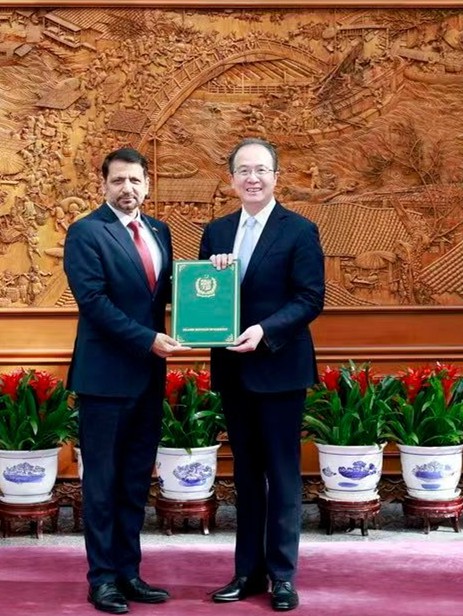
On the afternoon of May 13, I had the honor of presenting the artwork on behalf of The <Diplomat magazine> to Mr. Anouar CHETOUI, Chief Representative of the Tunisian National Tourist Office.
During the exchange event, we first sampled a variety of Tunisian specialties before engaging in deeper conversations about the cultural traditions and culinary customs of both countries. In our discussion, Mr. Anouar shared his appreciation for Chinese cuisine, especially hotpot. In his view, hotpot is not merely a type of food, but rather a symbol of openness, inclusiveness, and shared dining culture. Different ingredients come together in one pot, just as different civilizations grow through exchange, interaction, and mutual understanding. As a historic crossroads of Mediterranean civilizations, Tunisia has likewise absorbed and blended influences from Arab, African, European, and Mediterranean cultures throughout its history, ultimately forming its own distinctive and open cultural identity.
He especially spoke about how much he enjoys the atmosphere surrounding hotpot dining. People gather around a steaming table, growing closer through conversation and shared meals, and this warm and intimate atmosphere left a deep impression on him. At that moment, I realized that although China and Tunisia are separated by great geographical distance, both cultures place similar importance on family, togetherness, and emotional connection between people.
Later, as Mr. Anouar introduced us to Tunisia’s dates, olive oil, and wines, I found myself recalling the experience of tasting these foods earlier during the exchange event. In the context of the current mutual visa-free policies between China and Tunisia, I felt even more strongly that the distance between the peoples of our two countries is gradually becoming smaller. Perhaps in the future, more and more people from China and Tunisia will gather around the same table, sharing each other’s cultures and ways of life. While Tunisian friends experience the warmth, togetherness, and vibrant atmosphere embodied in Chinese hotpot culture, Chinese visitors may also discover Tunisia’s unique charm through its sweet dates, rich olive oil, and delightful Mediterranean wines.
We hope that my painting "Jasmine Family" can make the friendship between the Chinese and Tunisian peoples last longer and be more fragrant.
Wish China and Tunisia friendship for generations!
By/liu BoYan